
- Shop
- [Material on Early American Television Advertising of Prescription Obesity Drugs]
[Material on Early American Television Advertising of Prescription Obesity Drugs]

[Material on Early American Television Advertising of Prescription Obesity Drugs]
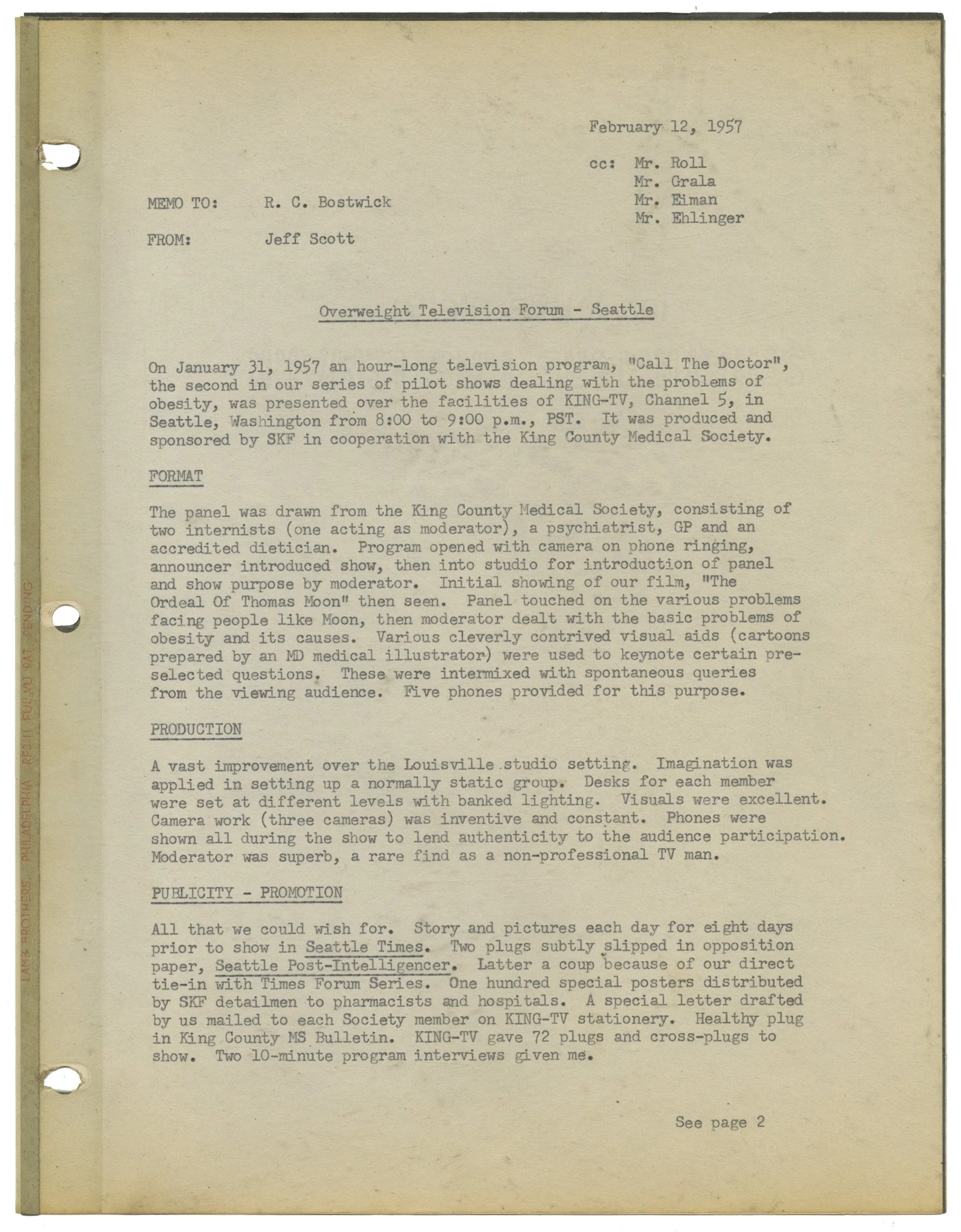
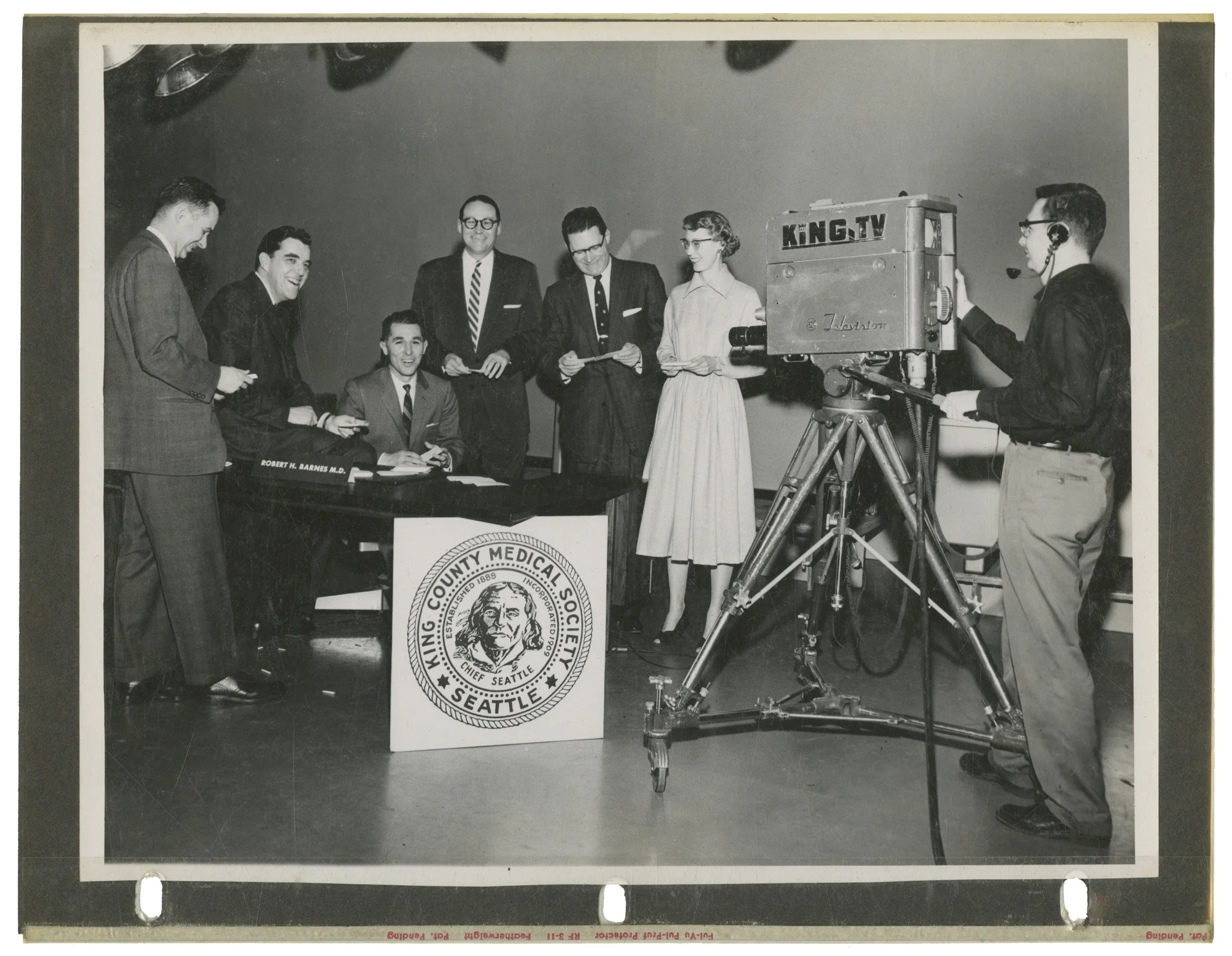
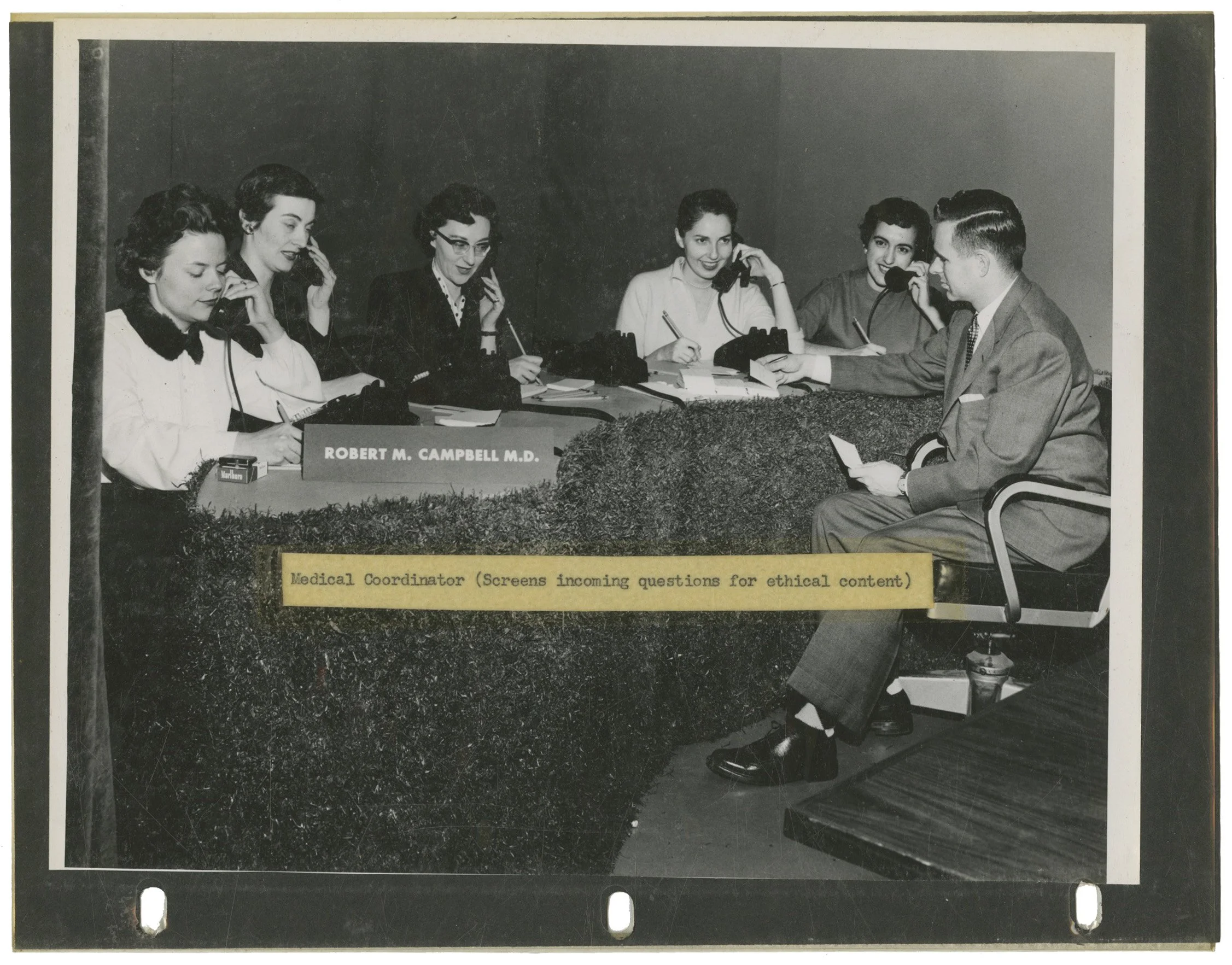
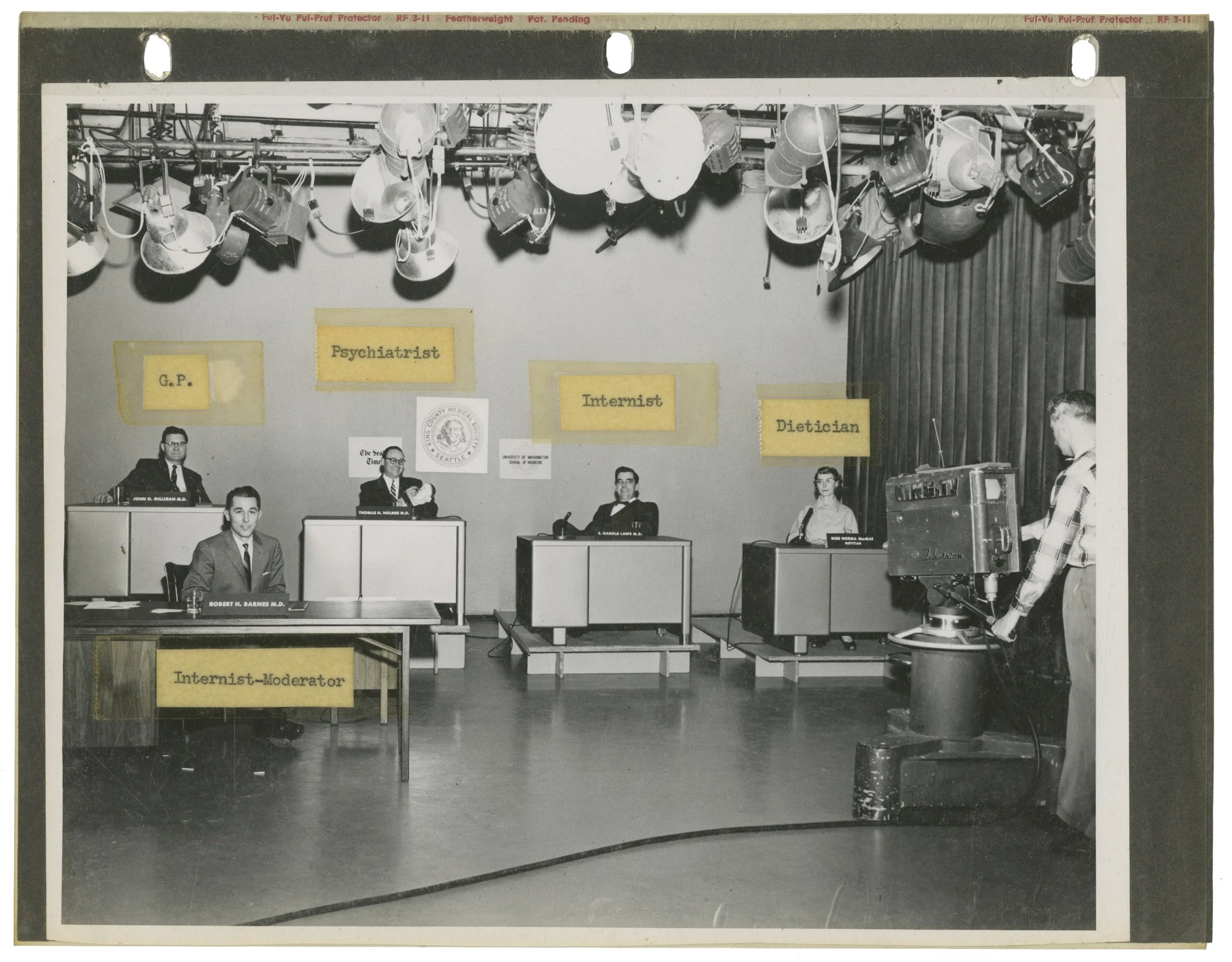
A small archive compiled by a public relations employee of the Smith, Kline, and French (SKF) pharmaceutical company named Jeff P. Scott forming an internal record of notably early American television advertising strategies for prescription drugs: two thin binders chiefly related to a series of 1957 call-in programs titled, "Call the Doctor.”'
The coordinated campaign appears to have been produced as four episodes in four different cities and the present materials document its second and fourth airings, in Seattle and Milwaukee. The focus was on obesity and while not explicitly named, the production was almost certainly part of medical propaganda promoting Dexamyl, a powerful and widely-abused barbiturate-amphetamine combination created by SKF in the 1950’s and sold as a treatment for weight loss and depression. The drug figures prominently in Nicolas Rasmussen’s 2009 NYU Press history of amphetamines, ON SPEED: From Benzedrine to Adderall which notes the success of its early marketing strategy:
“Dexamyl essentially was positioned as the drug for the family doctor to prescribe whenever there was little else he could do. The confluence of cultural trends perfectly set the stage for Dexamyl's explosion onto the medical scene. [...] Dexamyl's potential was virtually boundless, and for five years the product would dominate this rich market almost unchallenged." (pp. 131)
An exploitation of trust in the family physician was an integral component of “Call the Doctor" too. An internal memo on the March 10, 1957 episode by Scott remarked that dialogue for the panel of five physicians was “[...] basically scripted by us for the moderator [...] The format we now have appears to be the right one [...] show moves easily, usually we get a good pitch for prescribed drugs [...].”
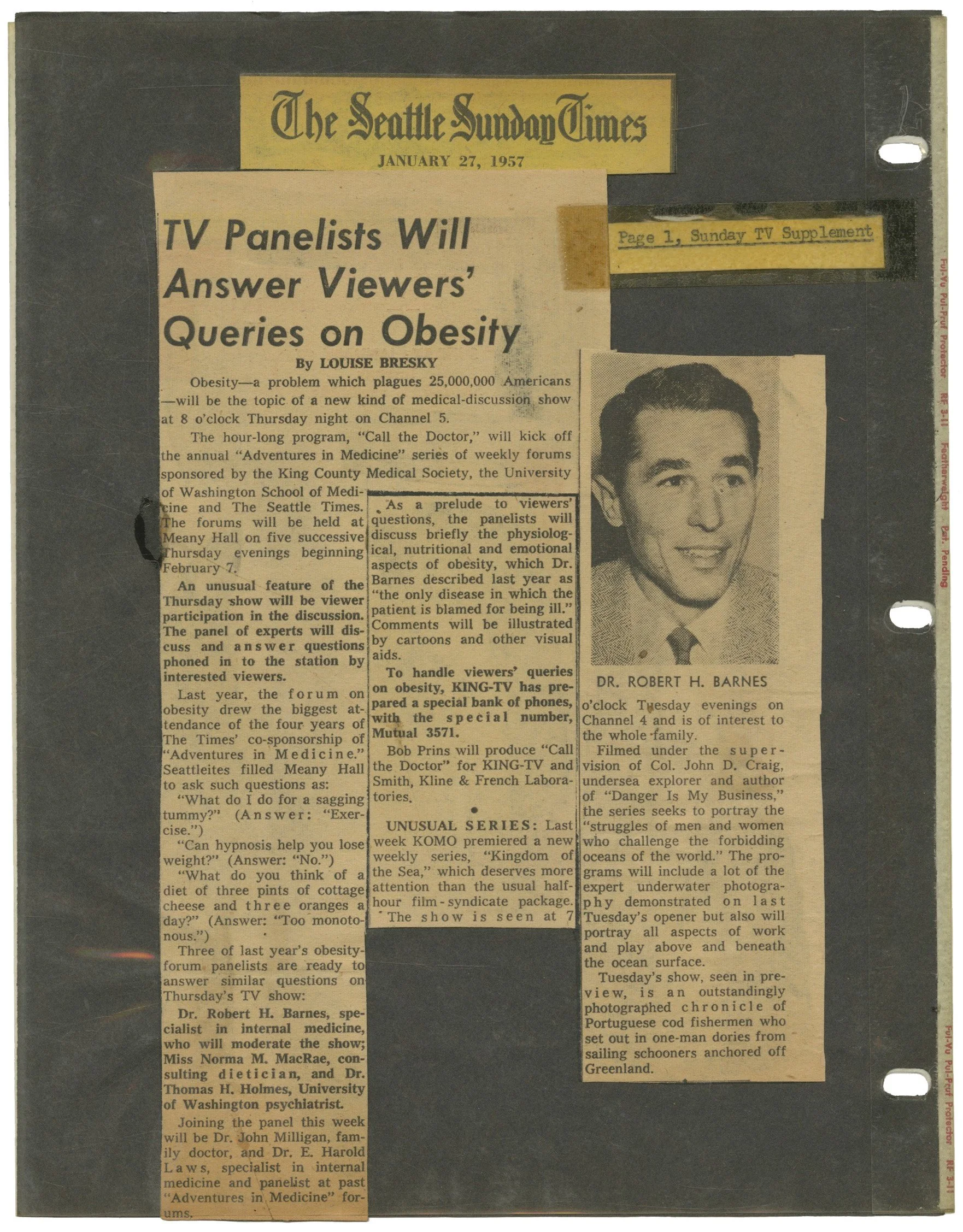
A similar memo, on the January 11, 1957 Seattle presentation noted further manipulation of the panel physicians, “Have decided to eliminate pre-set questions with prepared answers,” illuminating the subversive language (teasing the idea of a “wonder pill”) used by moderator Dr. Robert Barnes transcribed in a Seattle Daily Times article of February 1, 1957: “We have tried to show you that being overweight is a modern problem due to our way of living. There is no ‘wonder pill’ that will make you lose weight.”
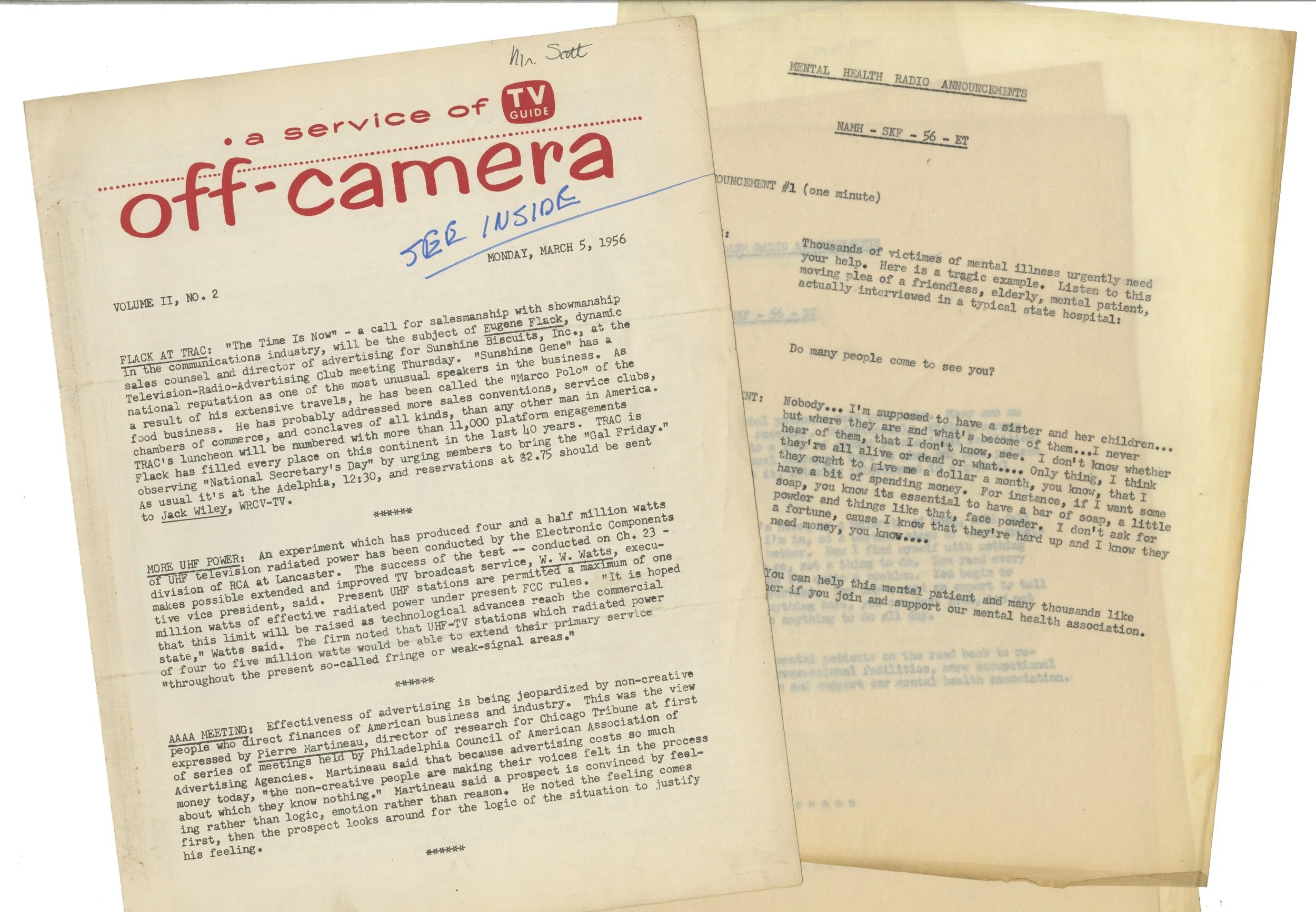
Additional loose materials relate to a 1956 screening of a short film from the “March of Medicine” series of titles made-for-television between about 1953 and 1956. We suspect the film is “We, the Mentally Ill,” and the same one mentioned by Robert Whitaker in MAD IN AMERICA: Bad Science, Bad Medicine, and the Enduring Mistreatment of the Mentally Ill (Basic Books, 2010) as an integral part of SKF’s strategy to launch Thorazine upon its FDA approval in 1954, calling it "[...] the kickoff in an innovative, even brilliant plan for selling the drug." (pp. 151).
Despite appearances of medical legitimacy, the commercial intentions of these SKF programs seem clear. We believe this material provides a scarce, behind-the-scenes glimpse at some of the first instances of consumer advertising of prescription drugs by the pharmaceutical industry on American television, a full four decades before the 1997 FDA Modernization Act relaxed regulations and enabled their omnipresence.
[Medicine] : [Obesity] : [Drugs]. [Material on Early American Television Advertising of Prescription Obesity Drugs]. Seattle, Washington and Milwaukee, Wisconsin: Smith, Kline, and French Laboratories, (1957). Two thin black pressboard binders, each approximately 11 1/2" x 9" holding a total of 22 clear plastic leaves (14 in one ; 8 in the other) with various correspondences, article clippings, and original photographs (8 black and white prints total ; each 8" x 10") set beneath, either loose or adhered to black paper insert sheets. One binder with 12 typed pages of scripts and a 4pp. bifolium newsletter loosely laid-in additional. Mild handling wear. Overall materials about very good.
A small archive compiled by a public relations employee of the Smith, Kline, and French (SKF) pharmaceutical company named Jeff P. Scott forming an internal record of notably early American television advertising strategies for prescription drugs: two thin binders chiefly related to a series of 1957 call-in programs titled, "Call the Doctor.”'
The coordinated campaign appears to have been produced as four episodes in four different cities and the present materials document its second and fourth airings, in Seattle and Milwaukee. The focus was on obesity and while not explicitly named, the production was almost certainly part of medical propaganda promoting Dexamyl, a powerful and widely-abused barbiturate-amphetamine combination created by SKF in the 1950’s and sold as a treatment for weight loss and depression. The drug figures prominently in Nicolas Rasmussen’s 2009 NYU Press history of amphetamines, ON SPEED: From Benzedrine to Adderall which notes the success of its early marketing strategy:
“Dexamyl essentially was positioned as the drug for the family doctor to prescribe whenever there was little else he could do. The confluence of cultural trends perfectly set the stage for Dexamyl's explosion onto the medical scene. [...] Dexamyl's potential was virtually boundless, and for five years the product would dominate this rich market almost unchallenged." (pp. 131)
An exploitation of trust in the family physician was an integral component of “Call the Doctor" too. An internal memo on the March 10, 1957 episode by Scott remarked that dialogue for the panel of five physicians was “[...] basically scripted by us for the moderator [...] The format we now have appears to be the right one [...] show moves easily, usually we get a good pitch for prescribed drugs [...].”
A similar memo, on the January 11, 1957 Seattle presentation noted further manipulation of the panel physicians, “Have decided to eliminate pre-set questions with prepared answers,” illuminating the subversive language (teasing the idea of a “wonder pill”) used by moderator Dr. Robert Barnes transcribed in a Seattle Daily Times article of February 1, 1957: “We have tried to show you that being overweight is a modern problem due to our way of living. There is no ‘wonder pill’ that will make you lose weight.”
Additional loose materials relate to a 1956 screening of a short film from the “March of Medicine” series of titles made-for-television between about 1953 and 1956. We suspect the film is “We, the Mentally Ill,” and the same one mentioned by Robert Whitaker in MAD IN AMERICA: Bad Science, Bad Medicine, and the Enduring Mistreatment of the Mentally Ill (Basic Books, 2010) as an integral part of SKF’s strategy to launch Thorazine upon its FDA approval in 1954, calling it "[...] the kickoff in an innovative, even brilliant plan for selling the drug." (pp. 151).
Despite appearances of medical legitimacy, the commercial intentions of these SKF programs seem clear. We believe this material provides a scarce, behind-the-scenes glimpse at some of the first instances of consumer advertising of prescription drugs by the pharmaceutical industry on American television, a full four decades before the 1997 FDA Modernization Act relaxed regulations and enabled their omnipresence.
[Medicine] : [Obesity] : [Drugs]. [Material on Early American Television Advertising of Prescription Obesity Drugs]. Seattle, Washington and Milwaukee, Wisconsin: Smith, Kline, and French Laboratories, (1957). Two thin black pressboard binders, each approximately 11 1/2" x 9" holding a total of 22 clear plastic leaves (14 in one ; 8 in the other) with various correspondences, article clippings, and original photographs (8 black and white prints total ; each 8" x 10") set beneath, either loose or adhered to black paper insert sheets. One binder with 12 typed pages of scripts and a 4pp. bifolium newsletter loosely laid-in additional. Mild handling wear. Overall materials about very good.