
- Shop
- THE THIRD BIRTH OF A NATION (Revised and Enlarged)
THE THIRD BIRTH OF A NATION (Revised and Enlarged)
THE THIRD BIRTH OF A NATION (Revised and Enlarged)
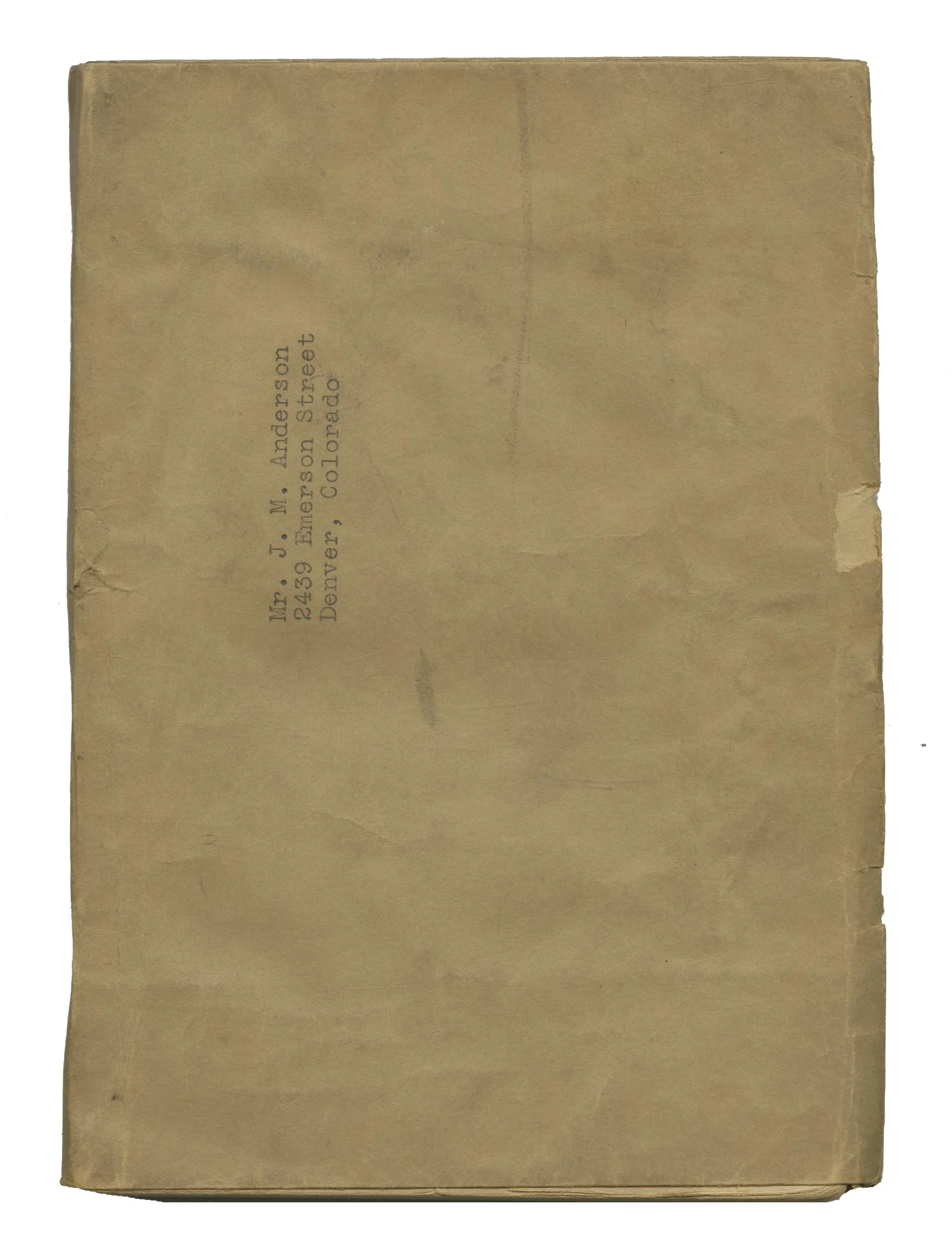
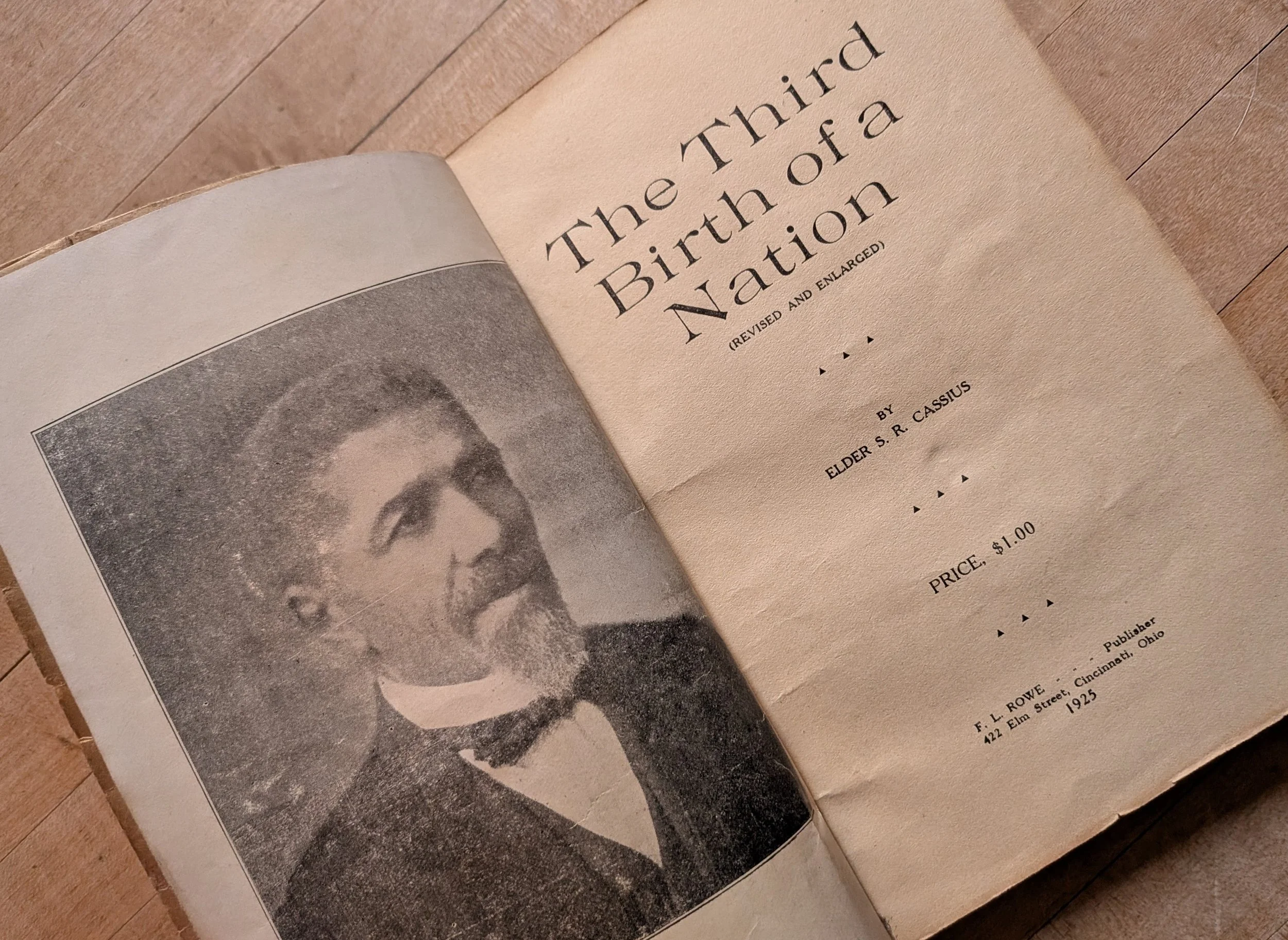
CASSIUS, Elder S[amuel].R[obert]. THE THIRD BIRTH OF A NATION (Revised and Enlarged). Cincinnati, Ohio: F.L. Rowe Publisher, 1925. [1-3], 4-120pp. Approximately 7 1/2" x 5 1/4." Plain waxy brown kraft paper wrappers with a typed mailing address and remnants of postal markings visible. Small ink check mark written in margin of pp. 18, mild handling wear. Overall very good.
The 1925 revised and enlarged edition of this work by Samuel Robert Cassius (1853-1931), a former enslaved African-American Church of Christ preacher whom his biographer, Edward J. Robinson, called "an ardent black evangelist and a scrupulous race man." First published in 1920 in Guthrie, Oklahoma as a rambling treatise on the "Race Problem" and as a contemporary rebuke of the D.W. Griffith film, THE BIRTH OF A NATION (1920):
"Then came that hateful book, "The Birth of a Nation." Never in the history of the world had such a cunningly arranged compilation of falsehoods been placed before the public. Not satisfied with the story in print, it was worked out in studios and thrown upon the screen in moving picture shows, and these pictures have caused more lynchings and burnings than all other things that have been done or said. Men have been known to leave the show with such hatred that lynching and burning have started on the least provocation. The effect upon the mind produced by this play has proved so dangerous to the peace of the negroes, that most of the Northern cities have prohibited it to be shown; even the legislatures of most of the Northern states have passed laws forbidding "The Birth of a Nation" being shown in the state." (pp. 39)
The present copy features a vernacular rebinding, one meant likely to obscure its internal contents with untitled wrappers of plain brown waxy kraft paper. The wrappers seem to have been repurposed from mailing material and bear remnants of postage stamping and the typed mailing address of a J.M. Anderson of 2439 Emerson Street in Denver's historically-Black Five Points neighborhood. A 1923 Ballenger and Richards Directory of Denver notes a J.M. Anderson of that address as a waiter at the Denver Club, a private, whites-only male social club downtown founded in 1880 and centered around squash courts. The specter of an African-American waiter necessarily obscuring the contents of an agitative text on race makes the binding a compelling modification to an already scarce and appealing title. OCLC notes about 20 copies of this 1925 edition in American libraries (with many prominent institutions lacking) and we note an enduring scarcity in commerce.
see also: ROBINSON, Edward J. TO SAVE MY RACE FROM ABUSE: The Life of Samuel Robert Cassius, University of Alabama Press, 2007.